by: Ji Ho (Geo) Yang, SESEC Family Program Specialist and PhD Candidate at the University of Washington
In the previous blog post, we discussed how the Levy (and other similar education policies) are hyper focused on trainings for school staff as a way to improve school outcomes, experiences, and equity. However, a hyper or sole focus on just training, such as restorative practices, as a policy instrument does little for school stakeholders. Training alone does not impact how people actually think, what they value, their perceptions; the ideologies they carry, and beliefs about their communities and the world. Training alone does not impact the culture underlying school structures that perpetuate inequitable school experiences. Training must be accompanied with systematic review of the cultures, ideologies, and beliefs that exist within a school; from principals and teachers, to the district and families. Without unpacking the internal and deeper cultural aspects, school structures remain the same, practices from training will not hold, and we will revert to the status quo.
This blog post will continue to focus on the FEPP Levy’s bucket of Ready to Learn, but will look at the strategy of “Basic Needs”, and specifically the sub-strategy of “New School Meals Program”. Similarly to the previous post I will draw from insights from my working research on teachers’ experiences and perspectives regarding school resourcing.
Like any other part of the FEPP Levy, there are myriad of key issues that need to be addressed in the design process and implementation processes of the FEPP Levy. One key issue pertaining to the Levy and its implementation includes the financial and funding sustainability to continue the lifespace of the Levy. This issue is tied to raising estimates of costs due to inflation and rising living costs, reliance on the passage of future tax reforms, focus on equality rather than equity, and the “house of cards” nature of SPS budgets. New School Meals is about providing universal meals to SPS students, including students who are not receiving free or reduced lunch (FRL) via federal funding.
There are many students who could benefit from a greater access to food and nutrition in their school. Food security and nutrition are barriers for students to engage in learning and make the most out of their school experiences. Access to free and reduced lunch (FRL) requires families to apply for that status and carries stigma for many students. FRL is a federal program and federal resourcing of schools that do not fully encompass all students who experience food insecurity and lack of nutrition. Not only are many students who need or could greatly benefit from FRL do not have access to it, FRL does not provide food security and nutrition for students beyond the school days, such as breaks and holidays. Current discussions around the design (and possible amendments) to the new school meals sub-strategy includes providing food and nutrition access beyond school days.
A completely universal approach to the new school meals sub-strategy may be a “hammer” approach to food inequity that could benefit from a more subtle approach, particularly within budget constraints. A universal approach will include students who are well-off regarding nutritional security and possibly putting a strain on the resources available for the long-term health of new school meals. This isn’t to say that in an ideal world, there should be universal food access in schools. However, how can we ensure that resourcing for equity in SPS is going towards closing gaps in school experiences and outcomes rather than equality from a shared but limited pot?
An alternative focus for new school meals should look into more culturally responsive and relevant food services for our students. Teachers in my working research teach in a racially, ethnically, culturally, and linguistically diverse school. What they see is how students are turned off by the meals provided by the school and resort to finding food outside of the cafeteria, including getting snacks from the local convenience stores. Students rely on nutritionally deficient food because it tastes better than the meals provided at their school. Meals provided at schools can do more to entice students to healthy and culturally connected meals. Students are not only missing on nutrition and fuel for their school day, but also missing learning opportunities about nutrition and cultural learnings about food.
Teachers in my research talked about how one day cafeteria staff were not present and so the instructional aides (IAs) of the school took responsibility to provide meals for students. The instructional aides were non-white and were reflective of many of the students’ cultural backgrounds. IAs chefed and dished meals for students that were based on their home culture, which were immensely popular with the students, and students enjoyed their school meals. Teachers I spoke with talked about the pride IAs had in feeding their students meals of their homes and the filled stomachs and souls of their students.
SPS is fortunate compared to many other school districts where SPS meals are sourced within the district, meaning they are made within SPS central kitchen and from SPS staff rather than outsourced to contracted companies such as Aramark. In talking with SPS and City staff about meal preparation for schools, the district does work to source local ingredients and create culturally relevant meals. This is already a far cry from how other major school districts approach food and nutritional services for students. What opportunities does the FEPP Levy present in growing nutritional services and access for our students? How can we better meet the basic needs for our students in order for them to be able to learn, excel, and enjoy their educational experiences? From teachers I spoke with, empowering school-level staff to curate meals for their own students is one way. The keyword is “empowering”, not adding more responsibilities and work. Another is to provide resourcing for teachers to have culturally responsive/relevant and nutritional snacks for students. Lastly, nutritional learning is also a critical component to meeting basic needs (not just having enough calories, but healthy calories that promote long-term health and habits).
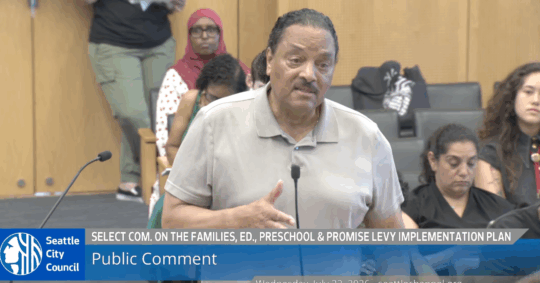
New School Meals is a reflection of larger Washington political focus on universal meal service and access. The focus on universal access of new school meals within the FEPP Levy is a potential subterfuge for equality rather than equity. In other words, how “targeted universalism” morphs into universalism. Yes, accommodations that support one student group in need is likely to benefit most if not all students. Yes, universal access including food should be the ultimate goal. However, with the fragility of the SPS budget, financial sustainability of the FEPP Levy, and the economic climate, it is imperative to prioritize those most marginalized and furthest away from educational justice. More importantly, we have seen so many efforts and developments towards equitable schooling become hijacked for universalism and equality, which are a guise to funnel resources away from those most marginalized by school systems. During one of the last FEPP Levy implementation hearings, Black leaders, including Elmer Dixon (founders of Seattle Black Panther party), spoke to the historic legacy of community food access in Black advocacy and importance of ensuring equity as a means towards equality. tentional in various aspects, from financial sustainability to community accountability. One area we need to continue to push on is the design of Ready to Learn and the strategy of Safety via Restorative Practices. Rather than solely focusing on school staff training, this specific strategy should focus on unpacking school culture; what lies in the hearts of our school leaders and the structural foundations that hold those hearts.
About Blog Series: The blog series is about sharing research, concepts, and issues of politics in educational advocacy and our community. As parts of educational advocacy work have been weaponized against justice and equity, it is important for us as advocates to distinguish between ‘real talk’ and ‘orchestrated distractions’. More importantly, educational advocacy cannot produce any justice or progress without a serious reflection of ourselves. Self-reflection is a foundational way to check ourselves in this work. As this blog series serves as an intimate exercise for me to do that critical self-reflection, I hope that it can serve as a resource for you to learn, question, and reflect (also share)! Thank you so much for taking the time to engage with the series, and please reach out if you have any wonderings, points of dialogue, etc ([email protected]).